Worth Their Salt: The British Producers Turning an Everyday Staple Into Something Extraordinary

Photo: Seán Pòl Ó Creachmhaoil, CC BY-SA 4.0, via Wikimedia Commons
Ask most home cooks to name a premium pantry ingredient and you'll hear about cold-pressed rapeseed oil, aged balsamic, or a really good butter. Salt rarely makes the list. It's so fundamental, so ever-present, that it barely registers as an ingredient at all — more of a utility, like water or heat. But spend five minutes talking to the people who actually produce British artisan salt, and that attitude starts to feel like a missed opportunity.
The salt you use genuinely changes how food tastes. Not in a subtle, you'd-only-notice-it-blindfolded kind of way. In a real, tangible, this-is-noticeably-better kind of way. And Britain, it turns out, has some of the finest salt producers in the world.
A Brief History of British Salt
Salt production has deep roots in this country. The town of Nantwich in Cheshire was a major salt-producing centre in Roman times, and the suffix '-wich' in English place names (Middlewich, Northwich, Droitwich) is itself a marker of ancient brine extraction. Medieval salt pans dotted the coastlines of Norfolk, Essex, and the Solent. For centuries, salt wasn't a condiment — it was a currency, a preservative, and a matter of survival.
Industrialisation eventually replaced most of these small-scale operations with large-scale mining and refining. The result was a product that was cheap, consistent, and almost entirely stripped of anything interesting. Refined table salt is essentially pure sodium chloride — functional, but flat.
What's been happening over the past two or three decades is a quiet revival. Small producers have returned to traditional methods, and what they're making is meaningfully different from the stuff in the blue drum.
Maldon: The One You Already Know (And What You Might Not)
If there's one British artisan salt that's broken into mainstream consciousness, it's Maldon. Produced in Essex since 1882, Maldon Sea Salt's distinctive hollow pyramid flakes have become a fixture in restaurant kitchens and on domestic worktops alike. The flakes dissolve quickly, have a clean, bright flavour without bitterness, and provide a satisfying crunch when used as a finishing salt.
But even Maldon is more nuanced than people realise. The flake structure — created by a slow evaporation process over open pans — isn't just aesthetically pleasing. It changes the way salt interacts with food. Those irregular, hollow crystals have more surface area than a granular salt, which means they adhere better to food and dissolve more evenly on the tongue. Use Maldon flakes to finish a rare steak or scatter over chocolate brownies just before baking, and you'll understand immediately why chefs reach for it.
Beyond Maldon: The Producers Worth Knowing
The British artisan salt landscape extends well beyond Essex, though it remains under-explored by most home cooks.
Halen Môn from Anglesey in North Wales is arguably the most decorated salt producer in the UK. Their Pure White Sea Salt has Protected Designation of Origin status — one of very few salts in the world to hold this distinction — and the flavour reflects the exceptionally clean waters of the Menai Strait. It's softer and slightly sweeter than Maldon, with a delicate mineral quality that makes it particularly good with fish, vegetables, and anything where you want the salt to enhance without dominating.
Cornish Sea Salt, produced near Penzance, harvests from the Atlantic off the Lizard Peninsula. The higher mineral content of these waters gives the salt a more complex, slightly oceanic character — excellent in bread doughs and with robust flavours like lamb or aged cheese.
Dorset Sea Salt is a smaller operation producing hand-harvested flakes from Poole Harbour. Their smoked variants — cold-smoked over local oak — have developed a following among barbecue enthusiasts and anyone who wants to add depth to slow-cooked dishes without adding liquid smoke.
Then there are the inland mineral salts. Droitwich Brine Salt, from Worcestershire, comes from underground deposits left by an ancient inland sea. The brine here is among the most concentrated in the world — ten times saltier than seawater — and the resulting salt has a dense, rounded flavour with a slight mineral warmth that's particularly good in curing and pickling.
Different Salts for Different Jobs
This is where things get genuinely practical. Not all salts perform the same way, and using the right one for the job makes a real difference.
For cooking pasta water, blanching vegetables, or seasoning during cooking: A mid-grade sea salt or kosher-style salt works perfectly well. There's no point using expensive flakes here — the subtleties are lost in boiling water.
For finishing: This is where quality earns its keep. A pinch of Halen Môn on a piece of pan-fried sea bass, or Maldon flakes on a soft-boiled egg with buttered toast, adds a textural and flavour dimension you simply can't replicate with table salt.
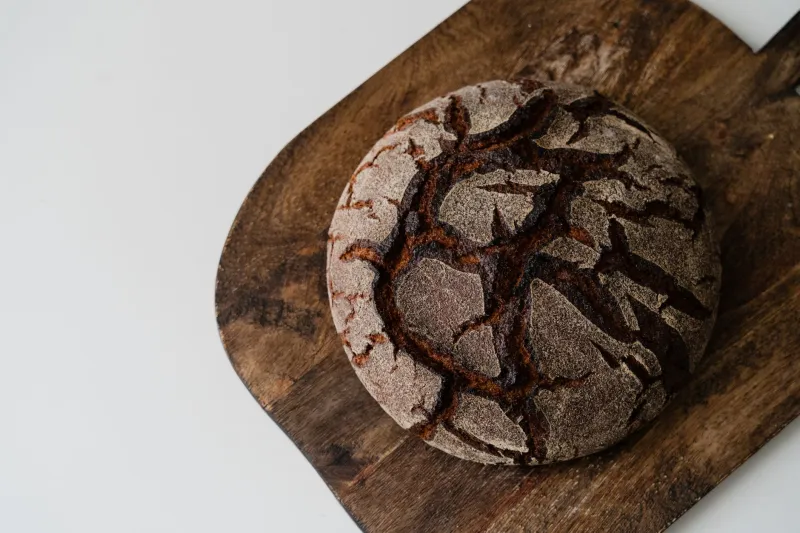
For baking bread: Sea salt with a slightly coarser grind gives better distribution through the dough. Avoid iodised table salt in bread — it can inhibit yeast activity.
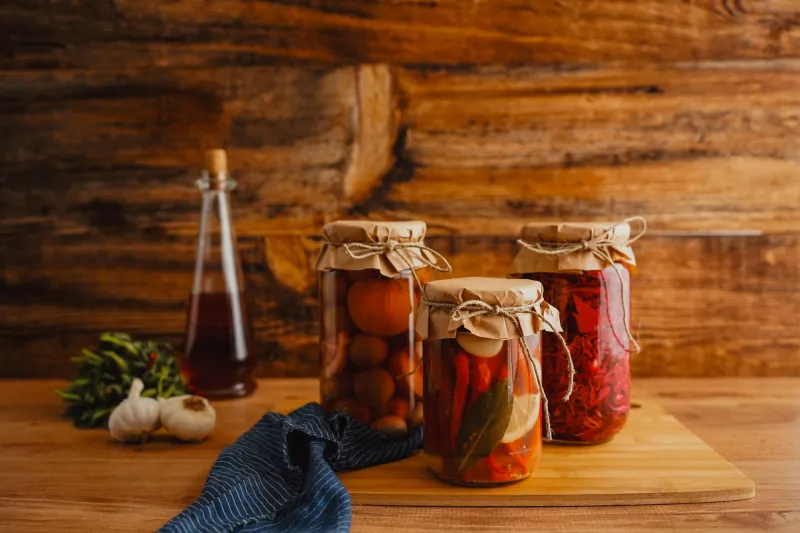
For curing and preserving: Mineral-rich salts with lower moisture content, like Droitwich brine salt, are ideal. The mineral compounds play a role in the curing process itself.
For chocolate and caramel: Flaked salts with a clean, sweet finish — Halen Môn is the gold standard here — work beautifully. The contrast between salt and sweetness is one of the most satisfying combinations in cooking.
The Case for Spending a Little More
A 100g bag of quality British sea salt costs somewhere between £2 and £5. Given that you use finishing salt in small quantities — a pinch here, a scatter there — a single bag lasts a considerable time. On a cost-per-use basis, upgrading your salt is one of the most economical quality improvements you can make to your cooking.
At Polston Foods & Drinks, we believe that the best British food starts with the best British ingredients. Salt sits at the very foundation of flavour — it's the thing that makes everything else taste more like itself. Giving it the same attention you'd give to a good oil or a quality vinegar isn't precious or fussy. It's just good cooking sense.