Grow Your Own Flavour: The Rare Herbs and Edible Botanicals Thriving in British Gardens
There's a particular satisfaction in snipping something from your own garden and folding it straight into whatever's on the hob. It's one of the oldest pleasures in British food culture — the kitchen garden as pantry, the plot as larder. But while most home growers are comfortable with a pot of basil on the windowsill or a row of chives along the path, a growing number of food-focused gardeners are pushing the boundaries of what's possible in British conditions.
The results are quietly extraordinary. Saffron, long associated with the warm Mediterranean, grows perfectly well in British soil. Vietnamese coriander — sometimes called 'rau ram' — thrives in a sheltered spot and offers a flavour that's more complex and interesting than its common cousin. Lemon verbena, sweet cicely, shiso, and a dozen varieties of edible flower are all well within reach for anyone with a garden, an allotment, or even a few well-positioned window boxes.
The question isn't really whether these plants will grow in the UK — many of them will, given the right conditions. The question is knowing which ones to try, how to give them the best possible start, and, crucially, what to do with them once you've got a harvest.
Starting With Saffron
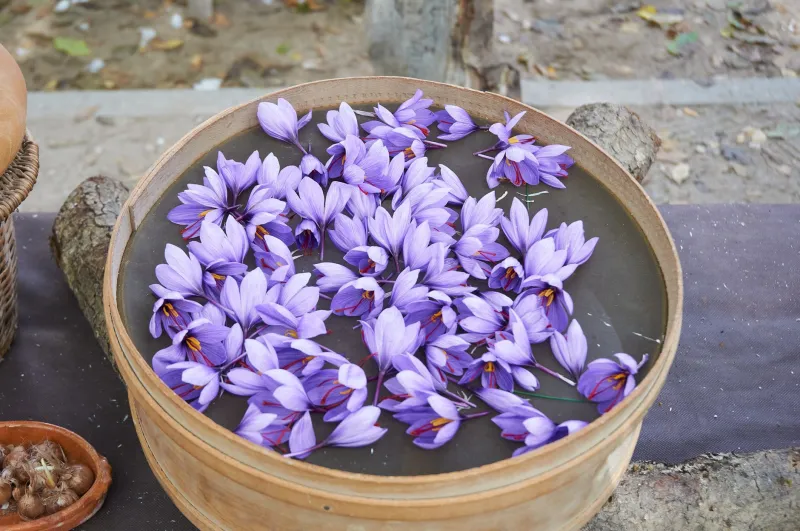
Saffron is, weight for weight, one of the most expensive ingredients in the world — which makes the fact that it grows happily in British gardens both remarkable and rather exciting. The saffron crocus (Crocus sativus) is a small, purple-flowered bulb that blooms in autumn, producing the bright red stigmas that are harvested, dried, and used to colour and flavour everything from paella to risotto to the classic British saffron bun of Cornwall.
Planting is straightforward. Saffron corms go in during late summer — July or August is ideal — in a well-drained, sunny spot. They don't like waterlogged soil, so raised beds or free-draining borders work best. Come October, you'll see the purple flowers appear, and harvesting is a matter of carefully removing the three red stigmas from each bloom with your fingers or a pair of small scissors, then drying them gently on a piece of kitchen paper.
You won't get commercial quantities from a home patch, but even a small bed of saffron corms can yield enough for several recipes over the course of a season. There's also something deeply satisfying about using saffron you've grown yourself — it changes your relationship with the ingredient entirely.
The Case for Vietnamese Coriander
If you've ever found common coriander (Coriandrum sativum) frustrating to grow — and many British gardeners have, given its tendency to bolt at the first hint of warm weather — Vietnamese coriander (Persicaria odorata) is a revelation. It's a perennial in mild winters, a vigorous grower in containers, and it produces an abundance of pointed, aromatic leaves throughout the growing season without the bolting problem that plagues its more famous relative.
The flavour is different from common coriander — slightly more citrusy, with a faint peppery heat and a lingering finish that some describe as almost mentholated. It's used extensively in Southeast Asian cooking but adapts brilliantly to British dishes too: try it stirred through a coconut-based fish broth, scattered over a Thai-inspired salad, or used to lift a simple cucumber and yoghurt raita.
Grow it in a pot in a warm, sheltered spot, keep it well-watered, and bring it inside on frosty nights. It rewards minimal fuss with maximum output.
Lemon Verbena: The Garden's Most Fragrant Secret
Lemon verbena (Aloysia citrodora) is a shrubby perennial that produces long, lance-shaped leaves with an intensely bright, clean lemon fragrance — more lemon than lemon itself, some growers say. It's been grown in British gardens since the 18th century, when it arrived from South America, and it has a long history in herbal medicine and perfumery alongside its culinary uses.
In the kitchen, lemon verbena is extraordinarily versatile. Steep the leaves in warm cream to infuse panna cotta or ice cream with a floral lemon note. Use them in place of lemon zest in a sponge cake. Muddle a few leaves into a summer cocktail or a jug of elderflower cordial. Dry them and use them to make a calming herbal tea.
In the garden, it needs a sunny, sheltered wall and some protection in colder winters — wrapping the base with fleece or mulching heavily usually does the trick. In very mild areas of the UK, established plants will come back reliably year after year.
Sweet Cicely: The Native Forgotten
Sweet cicely (Myrrhis odorata) is a British native that's been used in cooking for centuries and is now almost entirely forgotten outside of foraging circles. It's a large, feathery-leaved perennial that grows happily in partial shade — a relative rarity among culinary herbs — and produces a flavour that's sweetly aniseed, with a warmth that makes it genuinely useful in the kitchen.
The leaves can be used to sweeten tart fruit without adding sugar — cook them with rhubarb or gooseberries and you'll find you need significantly less sweetener than usual. The seeds, when green and unripe, have a strong aniseed flavour and can be chopped and used in salads or stirred into cream. The roots are edible too, though harvesting them means sacrificing the plant.
Sweet cicely is one of those ingredients that, once you've grown it, you wonder how you managed without it. It's also completely unfussy: plant it in a shaded border, water it in, and largely leave it alone. It will self-seed freely if you let it.
Edible Flowers: Beauty With Purpose
Edible flowers have had something of a renaissance in British kitchens over the past decade, partly driven by restaurant culture and partly by the growing interest in garden-to-table cooking. But beyond the familiar nasturtium and borage, there's a wide range of edible blooms that offer genuine flavour alongside their visual appeal.
Calendar (pot marigold) petals have a faintly peppery, slightly bitter flavour and a vivid orange colour that works beautifully scattered over salads or stirred into rice dishes. Viola flowers are sweet and mild, excellent in summer desserts or frozen into ice cubes for a striking drinks presentation. Chive blossoms have a gentle onion flavour and look magnificent on a simple potato salad.
For the more adventurous, anise hyssop (Agastache foeniculum) produces striking purple flower spikes with a sweet, liquorice-like flavour that pairs wonderfully with peaches, strawberries, and stone fruit in general. It grows vigorously in British conditions and self-seeds readily — plant it once and you'll have it for years.
Shiso: An Asian Herb for British Gardens
Shiso (Perilla frutescens) is an annual herb widely used in Japanese and Korean cooking, and it grows surprisingly well in British gardens when started off under glass in spring. Both the green and red varieties are worth growing — green shiso has a bright, aniseed-meets-mint flavour, while red shiso is more complex and slightly more bitter, and lends its vivid colour to pickles and drinks.
Use shiso leaves to wrap small pieces of grilled fish or meat, shred them finely into a noodle salad, or float a single leaf on a bowl of cold soba for a restaurant-quality flourish. It's also one of the most visually striking plants in the garden, making it as much an ornamental as a culinary choice.
The Joy of Growing What You Cook
What unites all of these plants is the way they change your relationship with cooking. When you've grown something yourself — watched it emerge, tended it through the season, harvested it at exactly the right moment — you use it differently. More thoughtfully, more generously, with a clearer understanding of what it actually is and where it came from.
That's the spirit at the heart of British food gardening, and it's one that's very much alive and growing.