Beyond the Button Mushroom: The Wild and Cultivated Fungi Changing What British Cooks Are Eating
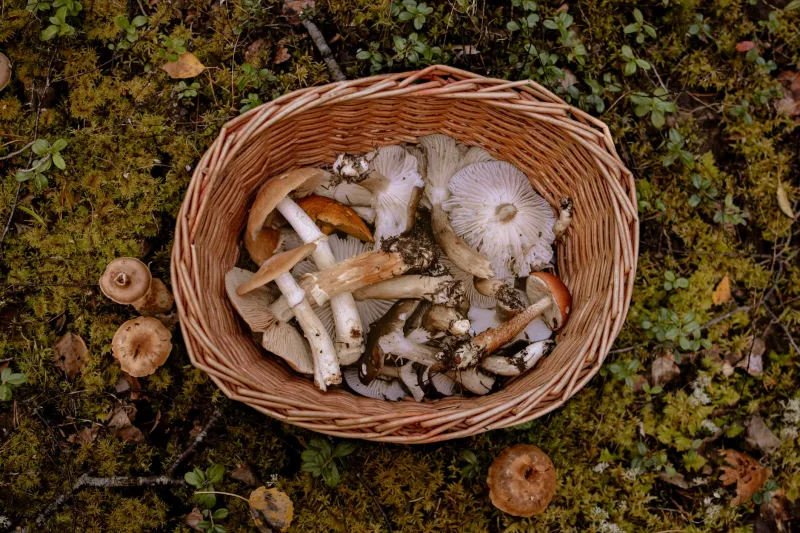
Ask most British shoppers to name a mushroom and you'll get one answer: the chestnut. Maybe, if you're lucky, the portobello. For a country surrounded by ancient woodland, hedgerows, and damp meadows — ideal habitat for hundreds of edible fungal species — our mushroom vocabulary has been remarkably limited.
That's changing. Quietly, enthusiastically, and with considerable flavour.
A Nation That Forgot Its Fungi
The British wariness around wild mushrooms is genuinely unusual by European standards. In France, Italy, Poland, and across much of Scandinavia, seasonal foraging is woven into the food culture. Families go out together, baskets in hand, with knowledge passed down through generations. In Britain, we largely looked on with polite suspicion.
Part of this is historical — a cultural anxiety around wild food that deepened through industrialisation. Part of it is practical: a handful of deadly species (the death cap, the destroying angel) are genuinely dangerous, and without a foraging tradition to fall back on, most people simply didn't bother.
But the foragers and specialist growers who have been quietly building a UK fungi scene over the past two decades are now visible enough to be impossible to ignore. And what they're bringing to the table — literally — is remarkable.
The Cultivators Doing Something Different
Wild foraging gets most of the attention, but some of the most exciting work in British fungi right now is happening in controlled growing environments: converted shipping containers, disused farm buildings, urban warehouses, and carefully managed woodland plots.
Small-scale cultivators are producing varieties that almost never appear in mainstream retail — oyster mushrooms in a spectrum of colours, lion's mane with its extraordinary texture and mild, almost seafood-like flavour, shiitake grown on British oak logs, and the deeply savoury king trumpet, which holds up beautifully to high-heat cooking.
"People come to us having only ever eaten chestnut mushrooms, and then they try a lion's mane cooked simply in butter," says one grower running a small operation on the edge of the Peak District. "The look on their faces is always the same. They can't believe it's a mushroom."
What makes this particularly interesting from an ecological perspective is how these cultivation methods interact with the land. Growing on agricultural byproducts like straw, wood chips, or spent coffee grounds means low waste inputs. Some producers are actively rewilding sections of their land by inoculating fallen logs with native species — creating habitats that support biodiversity well beyond the mushrooms themselves.
The Foragers Mapping Britain's Wild Harvest
Alongside the cultivators, a new wave of professional and semi-professional foragers is doing serious work to map and responsibly harvest Britain's wild fungal landscape.
Species like chanterelles — golden, fruity, and gloriously aromatic — grow in Scottish and Welsh woodland and appear briefly in late summer and autumn. Ceps (also known as porcini) are found across England, particularly in beech and oak woodland, and are among the most prized edible mushrooms in the world. Hedgehog mushrooms, with their distinctive spiny gills, have a mild, nutty flavour that makes them wonderfully versatile.
The key word in all of this is responsibility. Sustainable foraging means never taking more than a third of what you find, avoiding disturbing the mycelium network beneath the soil, and being absolutely certain of your identification before anything goes near a pan. For those new to foraging, joining a guided walk with an experienced mycologist is strongly recommended — several operate across the UK and are brilliant fun into the bargain.
What to Do with Them in the Kitchen
The culinary potential of these less familiar species is one of the most exciting things about the current fungi moment. Different varieties genuinely behave differently, and understanding that transforms how you cook with them.
Lion's mane tears into thick chunks and, when cooked in a dry pan before adding butter, develops an almost meaty texture. It's exceptional in a simple sandwich with good mayo, or sliced and used in place of scallops.
Chanterelles are best treated gently. A quick sauté in butter with a little thyme and a splash of cream is all they need — they don't want to be buried under other flavours.
King trumpet (or king oyster) mushrooms have thick, dense stems that can be sliced into rounds and cooked almost like scallops or sliced thinly and used as a bacon substitute when crisped in a hot pan.
Dried ceps are a pantry essential. A small handful, rehydrated in warm water and added to a risotto or braised dish, delivers an intensity of umami that's hard to achieve any other way. Don't throw away the soaking liquid — it's pure flavour.
Where to Source Them
Farmers' markets are your best starting point. An increasing number of specialist mushroom stalls have appeared at markets across the country, particularly in larger cities, and the growers behind them are invariably enthusiastic and knowledgeable. Ask questions — they love it.
A growing number of independent grocers and zero-waste food shops now stock cultivated varieties beyond the supermarket staples. Online specialist suppliers are also worth exploring if you're not near a good market, with next-day delivery making fresh mushrooms accessible across the UK.
For dried varieties, delis and independent food shops are a reliable source, and dried porcini, chanterelles, and morels are increasingly available from quality food retailers.
A Fungal Future
The mushroom growers and foragers reshaping Britain's relationship with fungi aren't just offering interesting ingredients. They're quietly demonstrating what a more ecologically thoughtful food system might look like — one that works with natural cycles, wastes very little, and produces food of extraordinary quality.
That's a story worth getting behind. And the food tastes brilliant, which helps.